Showing posts with label Gadgetry. Show all posts

SSD's - Speed vs Cost

Wednesday, May 19, 2010

2 comments
The speed of your computer depends a lot on the parts that you put into it. Most focus on the processor, video card and RAM. True, these components do improve performance dramatically should you choose to buy the fastest of the lot. But often the hard drive is taken for granted. A performance boost can definitely be had when upgrading to your hard drive the fastest available in the market. Right now, the fastest are the Solid-State Drives (SSD).

Intel 40 GB X25-V Value SATA II MLC Solid State Drive - Retail Box SSDSA2MP040G2R5SSD's offer speeds at par with your system memory or RAM. To give you a sense of how fast that is in practical terms, say you installed Windows on an SSD. If you click on an icon to launch your browser, it will launch in 1-2 seconds. Compare that to 3-5 seconds when your Windows is installed on a regular spindle drive. That's one heck of a performance boost, wouldn't you say? It also consumes less power, owing to the fact that it does not have any moving parts. That makes it ideal for stretching battery life in between charges in notebooks.

SSD's are not without cons. Owing to the process of how the data is made persistent in SSD's (remember, RAM looses the data when the computer's turned off, SSD don't), they actually wear out with repeated use. That's why it was necessary to incorporate technology to level out the wear. Data on SSD's aren't written in the same manner as spindle drives. An extra chip on SSD's monitors how many times a certain bit is written to and assigns new data to other parts to spread the wear out to different bits. In traditional spindle drives, data is written in sequence. When data is deleted, that skipped over portion (because it used to have data) is written over with new data. That's why you need to defragment spindle drives to re-arrange related data nearer to each other.

SSD's are also expensive at this time. Take for example the Intel X25-V is priced at US$125, or US$3.12 per GB. The OCZ Onyx, touted as one of the first sub-$100 SSD, is currently priced at US$90 for a 32GB model. That's roughly US$3 per GB. Kingston's SSD Now V Series, touted as an X25-V with a different controller by Anandtech, costs US$90 for a 32GB model and US$115 for a 40GB model. The cheapest still goes for about US$3 per GB, roughly Php126 and change per GB. At that price point, the money you'll shell out for a 40GB SSD will fetch you a 1.5 TB desktop drive in comparison. The prices have been coming down in the last few months as manufacturing costs are brought down by new advancements. However, don't expect them to be as affordable as spindle drives any time soon.

Seagate Barracuda 7200 1.5 TB 7200RPM SATA 3Gb/s 32MB Cache 3.5 Inch Internal Hard Drive ST31500341AS-Bare DriveI've been mulling over buying one for the past months. I have an Atom desktop that I chose to build precisely because of it's thrifty use of power. Adding an SSD to my rig would increase the power savings and lower the temperature inside the case. Using an SSD as a boot drive, the Seagate 500GB drive I currently have would make a great secondary drive for data. For these tough times though, value for money is still the priority. Speed will have to wait, at least for now.

Kindle - Now International!

Tuesday, October 13, 2009

0 comments
Just read this a few minutes ago. The Kindle can now be shipped, with the wireless subscriptions, internationally. I checked the link that had the country-specific information and the Philippines is one of the first 100 countries it can be sent to. I can have a Kindle and use it here!


I've been wondering about getting one since the first gen came out but I never thought they'd be bringing it to the Philippines this soon! This is another great geek gift. If you have a geek in the family and you're looking for a perfect gift for the Holidays, get your geek a Kindle.

And by the way, that makes me wonder whose 3G network they are on? Smart or Globe?

Ever Wonder What Happens in TechSupport?

Thursday, October 8, 2009

0 comments
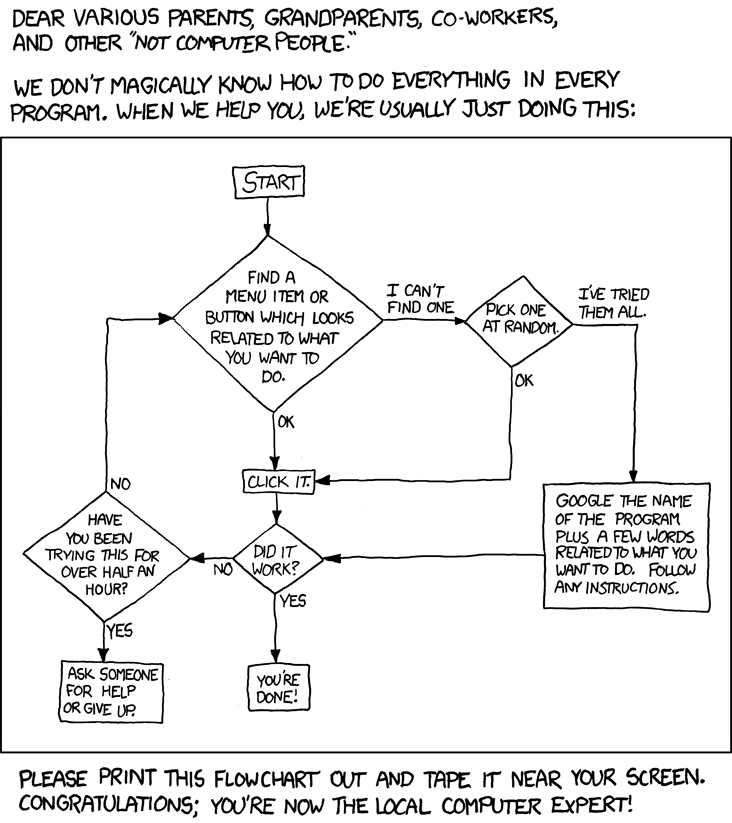
Here's a funny look at tech support, how things are supposedly done behind the scenes - LOL. For people working tech support, please don't take this offensively. It's just a comic after all.


For more funny and geeky comics, go to http://xkcd.com/

AMD's 'Bobcat' Platform

Wednesday, July 2, 2008

0 comments
With Intel positioning its Atom and Via competing with it with the Nano, the public is wondering what AMD is planning for serving the UMPC and low-power segments. I only recently learned of 'Bobcat', AMD's platform designed from the ground up for ultra-mobile PCs, devices and consumer electronics. Basically, its a re-designed x86 processor optimized for low-power devices with a TDP of 1 to 10 watts. It's being developed in parallel with Bulldozer, a seperate processor platform aimed at low-power desktops. In contrast, Bulldozer will have a TDP of 10 to 100 watts and a CPU-integrated GPU core that's squeezed right into the processor piece. Both are projected to launch in 2009, but by the way things are going, AMD should launch them earlier if they want to catch up.

Register Hardware ran a story on this last year. A more exhaustive article on Anandtech discusses the platform as a whole, with information interspersed with details from interviews they conducted. Another article from Tech Report discussed the technical merits of the platform when it was first revealed.

Unlocked Palm Centro Now Available

Tuesday, June 24, 2008

0 comments

Palm, Inc. announced today the availability of an unlocked version of its popular Palm Centro smartphone for the US market. Now offered unlocked for use on Sprint, AT&T and Verizon Wireless (three of the US's largest carriers), Centro gives U.S. customers the ability to choose the mobile phone service that fits their needs. Palm concurrently announced the availability of the Google(TM) Maps service for mobiles with My Location builtin on the unit itself, giving users faster access to local maps and driving directions.

The unlocked Centro will be available in a slightly updated white color with grey accents. Available in 25 countries worldwide, the Centro offers customers flexible ways to keep in touch with friends, family and co-workers through voice, SMS text messaging, email or the web. The Centro is Palm's smallest and lightest smartphone to date. The Centro is now available from the official Palm Store (online) for $299.

Via PX5000EG and The Naked Pico

Tuesday, May 20, 2008

0 comments
While we're talking about Via, watch this video feature about their latest Pico-ITX board. The PX5000EG uses an ultra-low voltage VIA Eden processor running off 1 watt of power. There's an announcement towards the end of the video about how to enter a contest to win your own Via Artigo Builder Kit.

Isaiah, Where Art Thou?

0 comments


A lot of news recently about Via's other products(most recently, its latest Pico-ITX board), but nary one about Isaiah-based products. Most of articles about the Isaiah have to do with conjecture at this point. No product announcements of any sort. That's opposed to Intel's Atom, with a few final products already announced and waiting to be launched. One of them, MSI's Wind was already launched in some countries, AFAIK. No announcements have been made of any Isaiah-powered product that will launch in the next few weeks.

When will they launch an updated Zonbu Mini Desktop with Isaiah in it? Any products that will compete with say the likes of the MSI Wind? Or at least a Via Artigo powered by the Isaiah chip? I'm waiting, still.

Intel's Atom

Sunday, March 16, 2008

0 comments
A few weeks back, Intel let the cat out of the bag and officially announced the branding of their Diamondville and Silverthorne chips. You can read more info about the Intel Atom here. Intel's strategy for marketing this chip seems to be twofold. First is to supply the chip for a new segment of the tech market, the niche that Asus was able to maximize when it brought the Eee PC to market -- the niche between laptops and PDA/smartphones. A lot of buzz around blogosphere has the Atom competing with Via's Isaiah for a place in devices like the second version of the Everex Cloudbook, Asus Eee PC 900 and the HP 2133.

Now the second purpose (and I'm guessing this will come much later) would be to market it in Asian countries where cost is the number one consideration. Intel certainly explored that segment in Asian markets when it released the D201GLY board to Asia. This product would appeal to those seeking a cheaper computing platform to build devices from. It will also appeal to those who require low-powered devices. The Atom processors are touted to consume only half a watt. Another thing going for this platform is the fact that Intel has already announced that they are already developing the dual-core version of the Atom. So investing on the platform would make sense for those looking for a steady upgrade path. In contrast, Via's Isaiah is compatible with the current hardware of the C7 (codenamed: Esther), it's previous generation of low-wattage chips.

Looking at developments in the last few months, I am quite glad I'm still waiting it out before I upgrade. The next few months will bring more "green" computer hardware to market, all geared around the platforms of these low-voltage processors. Whether its Via or Intel, it will all come down to price and availability. That being said, Intel may have an upper hand in countries like the Philippines where they already have an established distribution network.

Now, all I need to do is wait for the sweet spot.

A Pragmatic Approach to Mobile Computing

Tuesday, March 11, 2008

0 comments
I have always been reluctant to call myself a geek. The popular definition sees geeks as technically adept people working in highly specialized fields. I would have less reluctance to call myself one given today's emerging definition of a geek. Geeks are people who are fans of a particular interest and they carry out their devotion with a passion. So I am a geek by that standard. I hold a particular interest in computer hardware, open source technology and volunteer work. I'm not particularly savvy at any of those fields of interest, but I talk about them with a fervor that can only be matched by street preacher.

One thing that particularly interests me is making technology work for the layman. Living in a country like the Philippines, most people do not have access to the latest in gadgetry or computer parts. I take a more pragmatic approach by making the most of what is available and focusing on cost versus utility. Let me draw a comparison. In the US, mobile computing would mean having a decently spec'd laptop with a powerful processor or a PDA-phone at the least. A broadband wireless connection is also necessary to keep you connected wherever you may roam. All three are available in the country today. However, the cost would be prohibitive save for executives and businessmen. It isn't really worth your money to spend that much when your budget or your needs don't justify it. So I tell friends they can have the same mobility for less.

With internet shops situated in just about any street or corner of the city, I find it much more cost effective to just carry a thumb drive. USB thumb drives go for around 700 to 900 pesos for one that can hold 4 gigabytes worth of files. To make it more useful, load it up with the open source software package called Portable Apps. Portable Apps comes with a browser, email client, IM client, office suite, anti-virus and a bevy of smaller apps that extend its usability. The advantage of Portable Apps is in the way it behaves. All the apps are self-contained and will work off the USB drive without the need to install it in the host machine. That means plug it in to any Windows machine and it'll run. When your done just pull it out and walk away. All your settings and files will be preserved on the drive. It beats having to lug around a 7-pound laptop any day.

The next cheapest option is already in your pocket - your phone. Think about it. You carry it around. You never leave home without it. You can connect to the internet with it. The challenge is choosing a phone that will let you do browse, email and IM. One of the cheapest options is the LG KU250 with a street price of around 6,000 pesos. It's a 3-G phone that can be quite usable if your willing to exert a little effort. Installing the Opera Mini browser will make viewing sites not optimized for phones easier. If you have a Google Mail (Gmail) account, you can download an app that allows you to access your email directly without a browser. IM on this phone is a little limited though. You'll have to access your IM accounts through web-based services like Meebo. The only downside to using a phone is the small keypad. This isn't a deal-breaker for you folks who can type 30++ words per minute on your phones though.

If you're still looking for the full functionality of a PC in a small package, then consider the miniature wonder that is the Asus Eee PC. It's a tiny 7-inch laptop that's equipped with wifi. Calling it tiny may be a bit of an understatement. This thing weighs a little more than a pound. Given its svelte proportions, its small screen will require some squinting and its small keyboard can be difficult to type on. No worries for those of you who have LCD monitors, keyboards and mice waiting at your desks. The Eee PC can output to a monitor and has USB ports for connecting your keyboard and mice. Away from your desk, you'll have to make do typing with your index fingers. It's most useful for typing up short documents and emailing on the go. As with most PCs nowadays, it already comes with a browser, email client and an office suite pre-installed. The Eee PC price ranges from 17,000 to 19,000 pesos, depending on where you buy it.

When all is said and done, there is a solution for everyone's budget. Pick a solution that suits your needs and hopefully it won't kill your wallet.

Missed This Tiny PC...

Saturday, January 5, 2008

0 comments
I missed this tiny PC in my previous round up of low-powered computing devices. It's a more interesting option for me because this is a builder's kit and not a completely built up unit. I'd like to have one of these just to satisfy my craving for building something. Check it out:


Jessica Corbin's Back

Thursday, October 4, 2007

0 comments
Oh, yeah! And Jessica paired up with Patrick Norton to boot. Two of my favorite ex-TechTV hosts were brought together to host Tekzilla, a new video netcast from Revision 3. Here's a sampling:

Gadgets on a Budget

Monday, June 11, 2007

0 comments
Clearly the best benefit of the ever-advancing nature of technology is
the development of cheaper devices that enhance our personal
functionality.

A few days ago, I received a parcel containing the Treo650 that an
aunt of my wife had sent me. It was a gift, a very generous gift. And
I would like to thank her publicly. Thank you Aunt Edna! Your
generosity is boundless :-)

The Treo renewed my interest in handhelds and personal computing
devices. I had previously owned a Palm Tungsten T3 and I've been
yearning for another Palm handheld ever since I sold it. The only
thing holding me back was the price. These devices are not cheap. I
have been, in the months in between, content with reading press
releases of Palm, Inc. Can you tell I'm a fan? Anyway, the launch of
Palm's UMPC(http://en.wikipedia.org/wiki/Ultra-Mobile_PC), the Palm
Foleo(http://www.palm.com/us/products/mobilecompanion/foleo/), did not
escape my notice.

With Palm's entry into the UMPC bandwagon, my other dream (owning a
laptop) was slowly coming into reality. The prices, I predicted, would
come down. As Moore's Law (http://en.wikipedia.org/wiki/Moore's_law)
bears its full weight on the pace of chip development, we see products
coming out of the pipeline a lot more cheaper and smaller. My hopes
died when I saw the $599 price tag. I also chanced upon this article
(http://blog.wired.com/gadgets/2007/05/seven_sexy_alte.html) proposing
alternatives to the Palm Foleo, albeit just as expensive or even more
so.

My hope's were revived when I saw Asus' announcement in Taiwan's
Computex expo that it is launching a spawn of Intel's Classmate PC
program (http://www.intel.com/intel/worldahead/classmatepc/). The Asus
Eee PC701 (http://blogs.guardian.co.uk/technology/archives/2007/06/05/intel_classmate_becomes_199_asus_eee_subnotebook_pc.html)
was unveiled in the midst of spectators' "oohs!" and "aahs!". They
said the units would come to American shores as early as August this
year for $200. That's cheap! It's very barebones (specs here:
http://www.gadgettastic.com/2007/06/09/asus-eee-specs/). However, if
most of your computing time is spent surfing the internet and
retrieving mail, then this PC is for you. It even has built-in WiFi to
boot.

I'm eagerly anticipating it's release in Asia and I sincerely hope
this thing reaches Philippine shores. It would definitely be a great
device for my wife. She thinks she's a technophobe and half the time
she asks me about the computer. A simple connected device like this
could simplify things enough for her to do her extra work at home at a
fast enough pace. I just know she would love something as convenient
as this. I still have to convince my wife about how wonderful it is to
have a small personal device you can take with you all the time. I
love it when technology shrinks technology, the shrinking price tag
being a wonderful side effect of it all. My wife does too, she just
doesn't know it yet.

Gadgets and Ubuntu

Tuesday, March 27, 2007

0 comments
My interest was sparked by Dom's blogging on Ubuntu and Gaming. I've also heard a lot of buzz during the PS3's launch late last year about Ubuntu diehards wanting to run it on the console. Good to know there's another facet to the game gear and Ubuntu love affair:

Free Ground Shipping on Orders $125 or more at EpsonStore
Stop PC Crashes with WinZip System Utilities

Copyright © 2011 Tech Throes | Splashy Free Blogger Templates with Background Images, Trucks